Citizen Responders

.jpg?ixlib=rb-1.1.0&w=2000&h=2000&fit=max&or=0&s=e49909bc7d8e4f73e1a6096068d3727e)
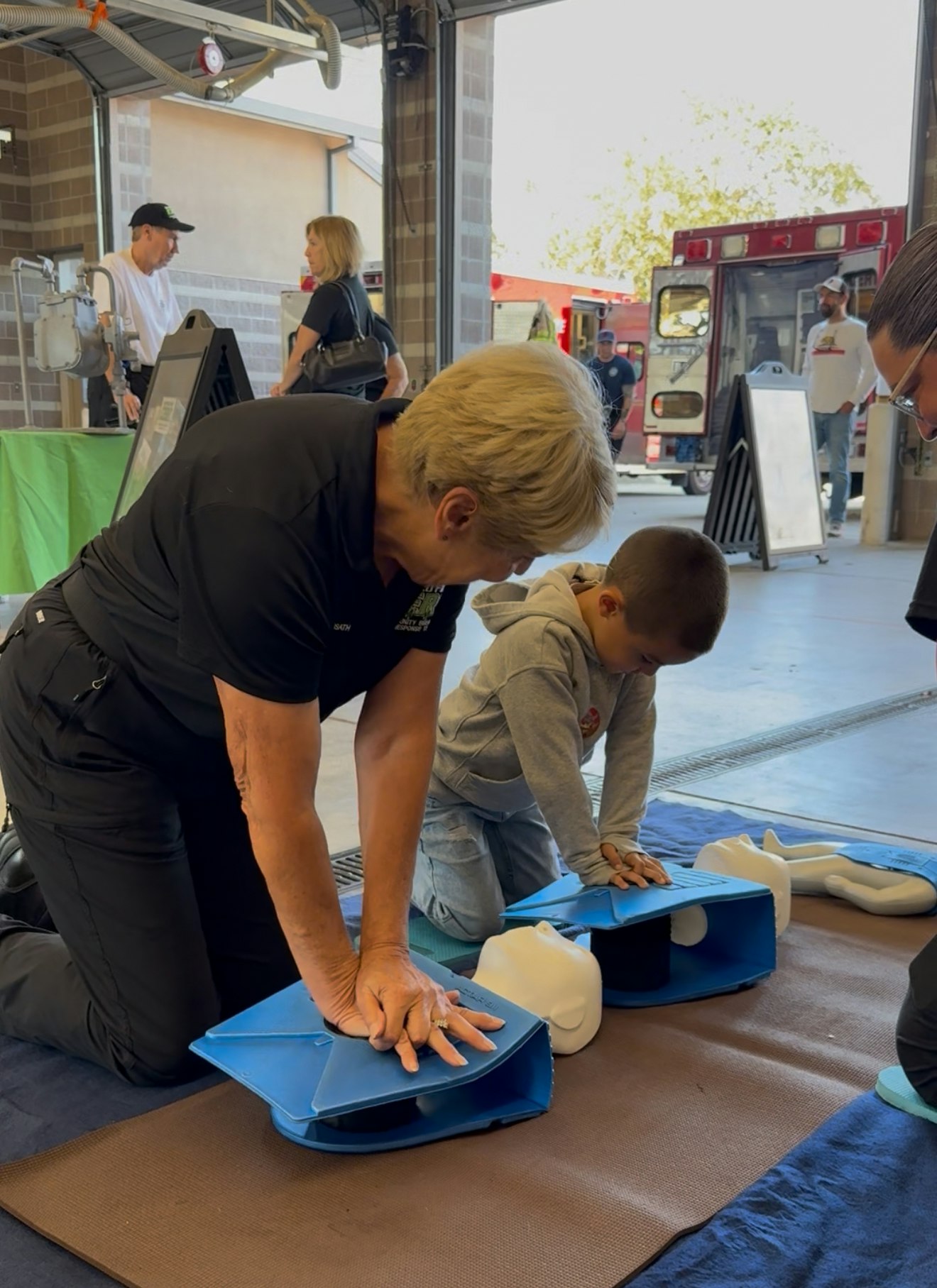
In 2025, Metro Fire launched the Citizen Responders Project to enhance community response to sudden cardiac arrest. The initiative focusses on increasing awareness, training residents in hands-only CPR and AED use, and expanding AED access in schools, businesses, and public spaces. These efforts work together to create a safer, more prepared community.
Get Involved!
Getting involved in citizen CPR programs is a vital way to strengthen the "chain of survival" in your local community, directly empowering you to save lives when seconds count. You can begin this rewarding journey by taking certified CPR and First Aid courses, which provide essential, hands-on training to handle cardiac emergencies. Beyond certification, you can take action by supporting community initiatives like PulsePoint to help locate and register Automated External Defibrillators (AEDs). For a quick start, hands-only CPR training lets you learn the most crucial, life-saving techniques in a short time. By advocating for these programs in your area and acting as a local partner, you can significantly increase the chances of survival for someone experiencing a cardiac emergency.
Citizen Responders Program

What is an Automated External Defibrillator (AED)?
An AED is a user-friendly medical device that analyzes heart rhythm and delivers an electric shock (defibrillation) if needed to help the heart restart effectively. They are often found in public places, similar to fire extinguishers, and are designed for ease of use by everyday citizens.
Why is it important?
- Sudden Cardiac Arrest (SCA) is a leading cause of death, with survival rates low without immediate intervention.
- Using an AED within minutes of SCA can dramatically improve survival odds, making bystanders critical to saving lives, in the fire department we call this a link in the chain of survival.
How to find one on PulsePoint:
- Download the PulsePoint AED App: Get the app on your smartphone.
- Use the Map: The app displays publicly accessible AEDs in your community on an interactive map.
- Alerts: If you're trained and signed up, the app can alert you to nearby cardiac arrests and guide you to the closest AED.
Need to add an AED to PulsePoint?
What is a HeartSafe Community?
A Heart Safe Community is one proactively prepared to save lives from sudden cardiac arrest (SCA) by boosting CPR training, increasing public access to AEDs, and strengthening emergency response systems; you can lead the charge by forming a core team, partnering with Metro Fire, raising awareness, mapping AEDs, and advocating for policies to implement widespread training and accessible defibrillators. Check out these links to learn more about a heart safe community.
Heart Safe Community Partners who offer full CPR Certification & Training
Schools
Steps to Become a Heart Safe School
How to Create a Cardiac Emergency Response Plan (CERP)
Survivors of Sudden Cardiac Arrest
Welcome to our Stories of Survival—a collection of firsthand video testimonials from individuals who have stared down sudden cardiac arrest and won. These powerful, personal accounts showcase the miraculous resilience of the human heart and highlight the critical, life-saving impact of bystander CPR and AED usage. While sudden cardiac arrest can strike anyone, anywhere, these stories of hope offer insight into the journey of recovery and serve as a testament to the fact that immediate action saves lives. We hope these narratives inspire you to learn CPR, advocate for AED awareness, and honor the, 'second chance' at life that these survivors are living to the fullest.
Survivor Videos
In the News
When sudden cardiac arrest strikes, every second counts, and the actions of bystanders in those first few minutes can mean the difference between life and death. Recent headlines have highlighted a surge in inspiring stories—from athletic fields to shopping centers—where ordinary people, armed with CPR and AED training, have become lifesavers.
Caring for Yourself: Citizen Responder Mental Health Resources
In times of crisis, citizen responders—from neighborhood volunteers to local helpers—often rush to support others, yet frequently neglect their own mental and emotional well-being. Caring for Yourself: Citizen Responder Mental Health Resources is dedicated to providing you with the essential tools, support networks, and self-care strategies necessary to maintain your resilience while helping others. Recognizing that taking care of your mental health is not selfish, but rather a vital part of effective service, this section connects you with confidential resources, understanding, and coping, to prevent burnout and manage stress. Explore these resources to ensure that as you continue to support our community, you are also supported, healthy, and empowered.
- PulsePoint’s Responder Mental Health Resources
- Understanding What You See and Hear During CPR
- Coping With A Traumatic Event
Coming Soon!
Training Videos
In the crucial moments of a cardiac emergency, taking action quickly can make a significant difference. Hands-only cardiopulmonary resuscitation (CPR) is an approach that focuses on two essential steps: calling emergency services and providing chest compressions. Learning this technique in a training course can equip you with the skills to help maintain circulation until professional medical help arrives. This method is particularly useful for bystanders who may not have received full CPR training, allowing them to provide critical support in an emergency. Preparing yourself with the knowledge of hands-only CPR means you can be ready to respond effectively in a life-threatening situation. Coming soon will be videos to show you how to perform hands-only CPR.

